Astonishing Tourism Accommodation Examples That Redefine Stays
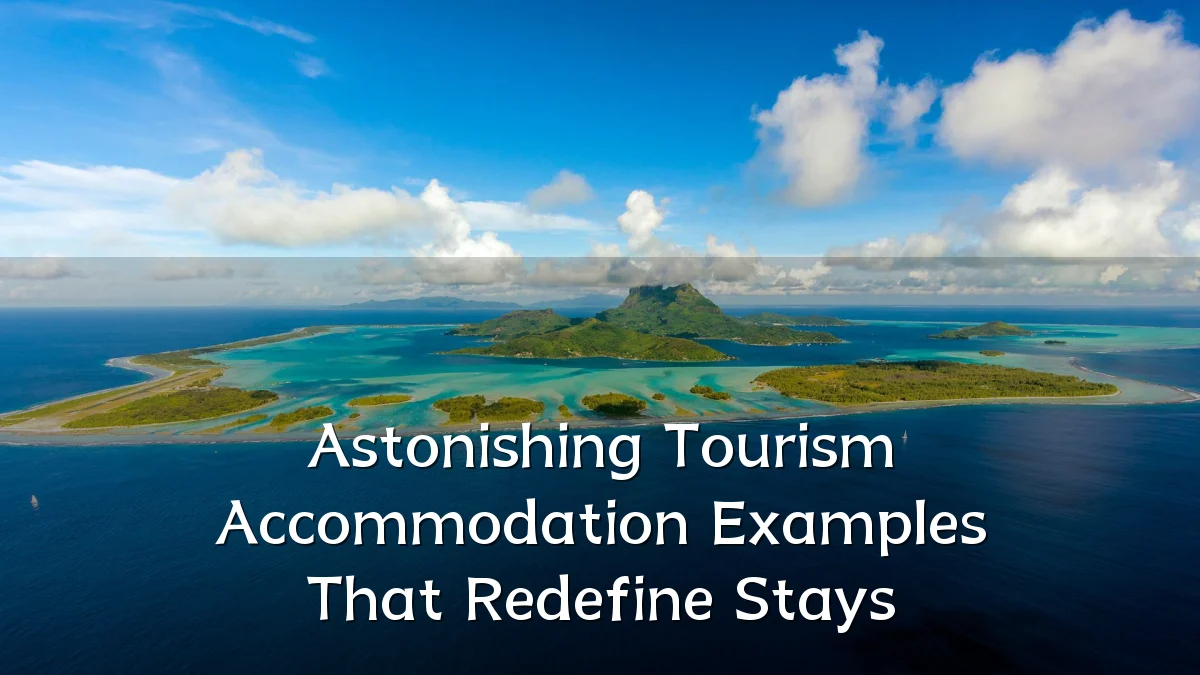
From repurposed industrial sites to remote eco-lodges, the tourism accommodation sector is undergoing a visible shift. Travelers are no longer satisfied with a room that merely provides sleep; they are seeking spaces that add context, story, and meaning to their journey. The following analysis examines the accommodation formats currently reshaping expectations, the concerns they raise, and where the sector may be headed.
Recent Trends
Several accommodation categories have moved from niche curiosity to mainstream option within a short period. These formats share a common thread: they emphasize place, design, and experience over conventional hotel amenities.

- Adaptive reuse stays: Former lighthouses, railway carriages, silos, and even aircraft fuselages converted into bookable lodging.
- High-end glamping: Safari tents, geodesic domes, and treehouses with full en-suite facilities and curated local dining.
- Immersive heritage properties: Restored castles, monasteries, and farmsteads that integrate historical interpretation into the stay.
- Micro-architecture units: Compact, design-led cabins in remote landscapes, often off-grid with solar power and rainwater collection.
- Community-based homestays: Accommodation tied to local livelihoods, where hosts provide meals, guiding, or craft workshops.
Background
The expansion of accommodation options is not an isolated phenomenon. It follows broader changes in traveler behavior and platform economics. Short-term rental platforms lowered the barrier for property owners, while social media created visible demand for photogenic, unique interiors. At the same time, destination management organizations began promoting dispersed lodging to reduce overcrowding at traditional tourist hubs.

This evolution also reflects a maturation of the hospitality workforce. Architects, chefs, and cultural managers are increasingly involved in small-scale lodging projects, raising the standard of design and service in places that previously offered only basic guesthouses.
User Concerns
While the novelty of these accommodations attracts attention, travelers express recurring uncertainties that influence booking decisions.
- Reliability of amenities: Off-grid and converted structures may promise a certain level of comfort, but heating, water pressure, and connectivity can be inconsistent.
- Access and mobility: Remote units are often reached by unpaved roads or long walks, which is not always clear in promotional imagery.
- Safety and regulation: Some conversions operate outside standard hotel licensing, raising questions about fire safety, structural certification, and emergency procedures.
- Value for money: Unique accommodations sometimes carry premium pricing, and travelers wonder whether the experience justifies the cost relative to a conventional hotel.
- Local impact: In residential areas, short-term stays can pressure housing supply and alter neighborhood character.
Likely Impact
The rise of distinctive accommodation types is likely to influence how destinations plan and regulate tourism infrastructure. Municipalities may introduce clear zoning rules for conversions and glamping sites, while booking platforms may adopt standardized verification of safety and accessibility features. For operators, the competitive edge will shift from novelty alone to operational reliability and authentic integration with the local community.
There is also likely to be an effect on conventional hotels. Many are responding by renovating with stronger local character, adding communal kitchens, workspaces, or outdoor amenities, and offering packages that include activities rather than just lodging. In this sense, the most visible impact of unconventional accommodation may be on the mainstream sector itself.
What to Watch Next
Several developments could determine whether the current wave of extraordinary accommodation becomes a durable category or a passing phase.
- Regulatory clarity: Watch how cities and rural regions classify and tax converted and semi-permanent structures.
- Seasonality management: Will destinations with weather-dependent glamping or remote cabins develop year-round propositions?
- Climate resilience: Off-grid and lightweight constructions may face increased scrutiny regarding wildfire risk, water sourcing, and waste treatment.
- Digital accessibility: The growth of booking platforms for non-hotel stays will depend on clearer depictions of access constraints and realistic amenity levels.
- Cultural ownership: As heritage properties and community homestays scale, the question of who holds the narrative and benefits from tourism revenue will become more prominent.
The accommodation landscape is no longer defined by a uniform standard. The formats that succeed in the coming years will likely be those that balance spectacle with service, and convenience with responsibility. For travelers, the expanding range of choices offers something broader than a place to sleep: a new way to encounter a destination, provided expectations are aligned before arrival.